Past launch
Launched successfully
NISAR (NASA-ISRO Synthetic Aperture Radar)
GSLV Mk II, flown by Indian Space Research Organization
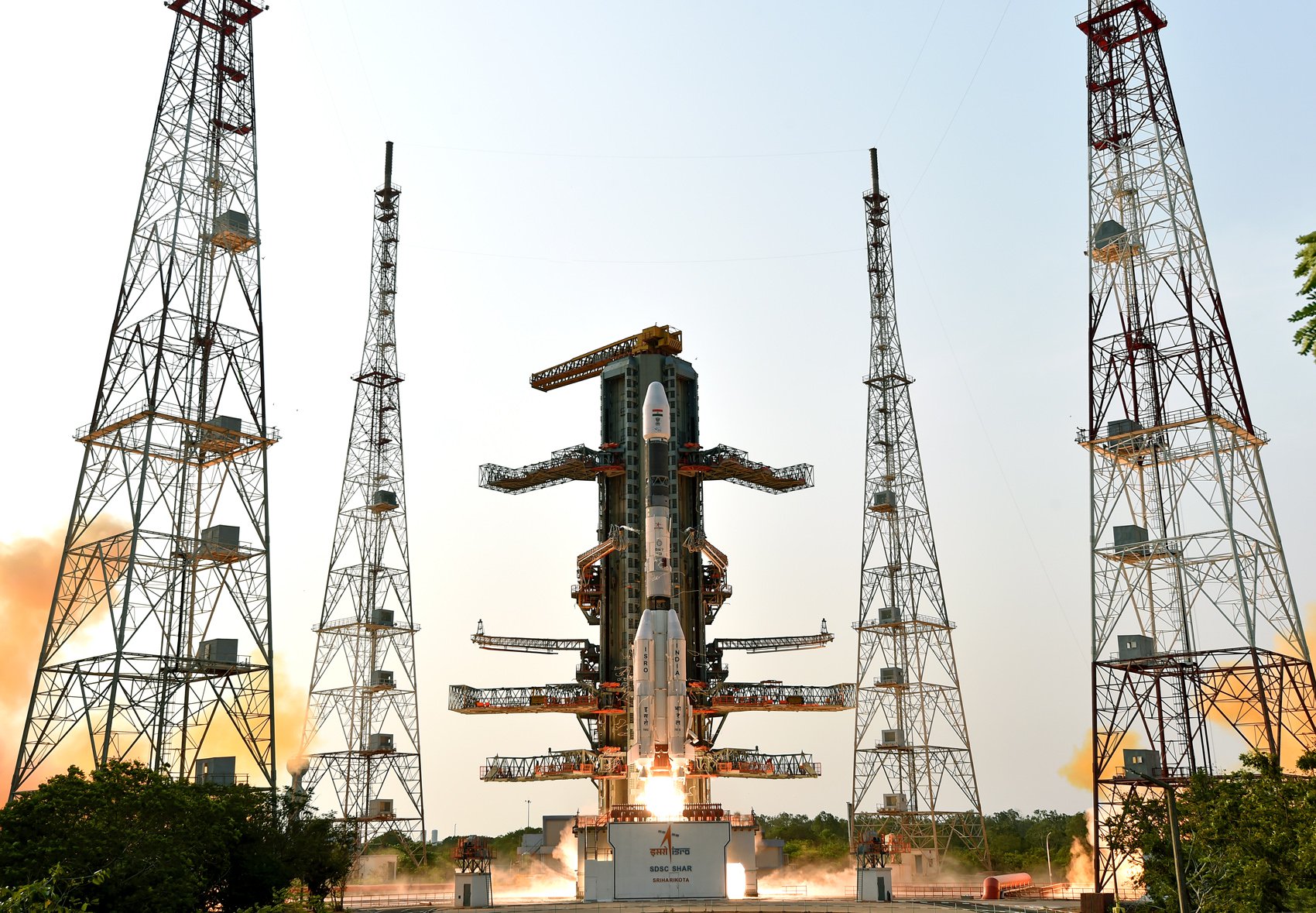
Launches / GSLV Mk II
GSLV Mk II, flown by Indian Space Research Organization
This was Indian Space Research Organization's 3rd launch of 2025, and its 96th in all.
Counting every operator, it was the 168th orbital launch attempt anywhere in 2025, and the second from Satish Dhawan Space Centre Second Launch Pad.
 Indian Space Research Organization
The NASA-ISRO Synthetic Aperture Radar, or NISAR satellite, will use advanced radar imaging to map the elevation of Earth's land and ice masses 4 to 6 times a month at resolutions of 5 to 10 meters. It is designed to observe and measure some of the planet's most complex natural processes, including ecosystem disturbances, ice-sheet collapse, and natural hazards such as earthquakes, tsunamis, volcanoes and landslides. Under the terms of the agreement, NASA will provide the mission's L band synthetic aperture radar (SAR), a high-rate telecommunication subsystem for scientific data, GPS receivers, a solid-state recorder, and a payload data subsystem. ISRO will provide the satellite bus, an S band synthetic aperture radar, the launch vehicle, and associated launch services.
Geosynchronous Satellite Launch Vehicle Mark II (GSLV Mk II) is the largest launch vehicle developed by India, which is currently in operation. This fourth generation launch vehicle is a three stage vehicle with four liquid strap-ons. The indigenously developed cryogenic Upper Stage (CUS), which is flight proven, forms the third stage of GSLV Mk II. From January 2014, the vehicle has achieved four consecutive successes.
12 flights, 10 of them successful.
Indian Space Research Organization
The Indian Space Research Organisation (ISRO) is the space agency of the Government of India headquartered in the city of Bangalore. Its vision is to "harness space technology for national development while pursuing space science research and planetary exploration."
99 launches so far, 84 of them successful.
It went up from Satish Dhawan Space Centre Second Launch Pad at Satish Dhawan Space Centre, India.
This one is done, but there is another along shortly. Flyby works out whether it climbs into your sky, and wakes you in time to get outside.
Get Flyby free