Past launch
Launched successfully
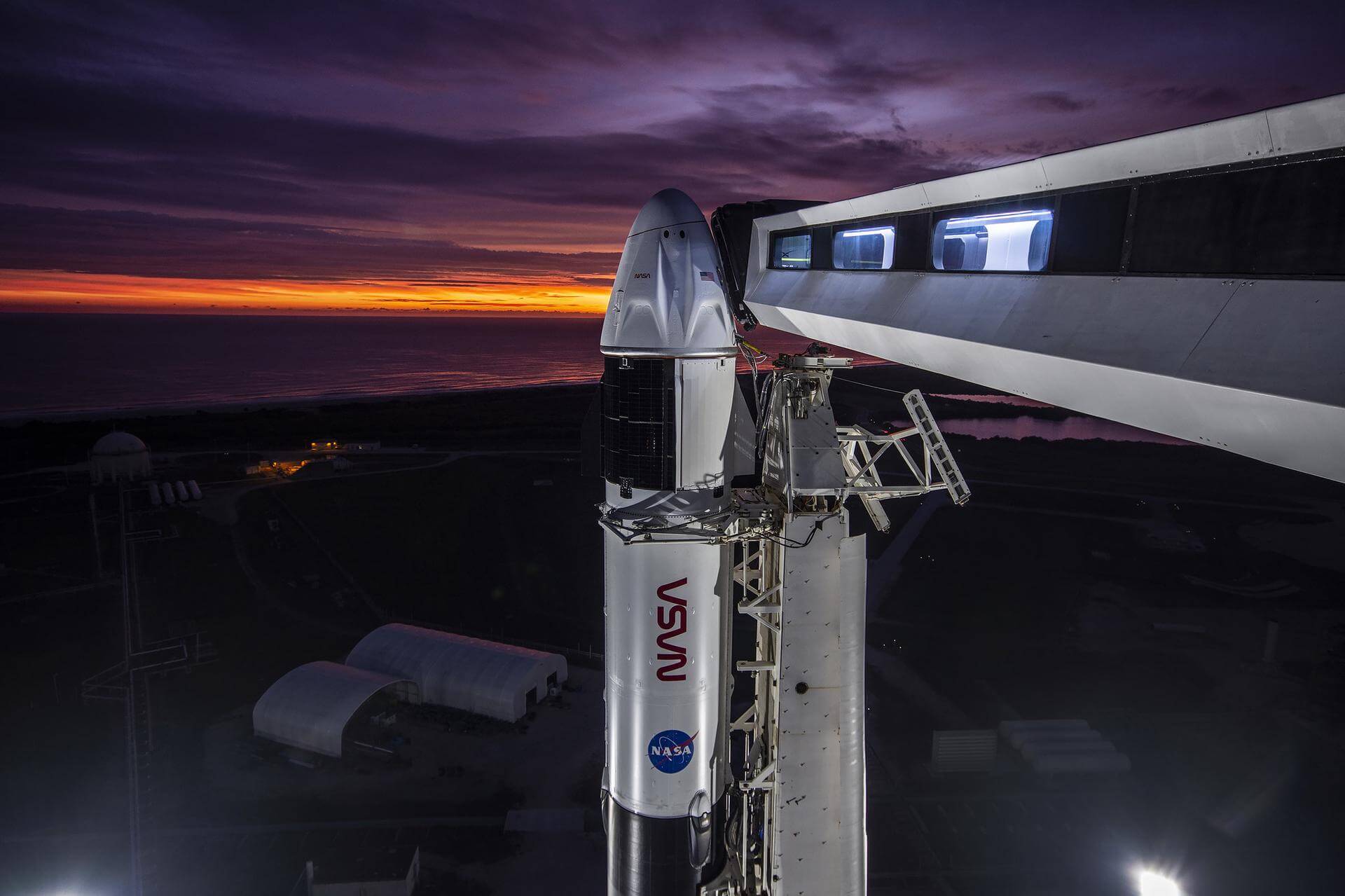
Crew-13
Falcon 9 Block 5, flown by SpaceX
Launches / Falcon 9 Block 5
Falcon 9 Block 5, flown by SpaceX
This was SpaceX's 114th launch of 2026, and its 733rd in all.
Counting every operator, it was the 234th orbital launch attempt anywhere in 2026, and the 48th from Space Launch Complex 40.
 SpaceX
 Crew-13 is the thirteenth crewed operational flight of a Crew Dragon spacecraft to the International Space Station as part of NASA's Commercial Crew Program.
The Commercial Crew Program (CCP) is a human spaceflight program operated by NASA, in association with American aerospace manufacturers Boeing and SpaceX. The program conducts rotations between the expeditions of the International Space Station program, transporting crews to and from the International Space Station (ISS) aboard Boeing Starliner and SpaceX Crew Dragon capsules, in the first crewed orbital spaceflights operated by private companies.
Falcon 9 is a two-stage rocket designed and manufactured by SpaceX for the reliable and safe transport of satellites and the Dragon spacecraft into orbit. The Block 5 variant is the fifth major interval aimed at improving upon the ability for rapid reusability.
642 flights, 641 of them successful. 627 boosters brought back from 632 attempts.
First stage Second stage Third stage
Simulated from the published flight plan. The climb flattens as the rocket pitches over to build sideways speed, which is why a launch stays visible so far from the pad. A dashed line is a stage that separates and flies back down, either to the pad or to a ship waiting downrange.
Going to watch it in person? Flyby's Pathfinder points your camera at the pad, so you are not stood there guessing which one it goes up from. It puts this same climb on a globe you can turn, too.
Space Exploration Technologies Corp., known as SpaceX, is an American aerospace manufacturer and space transport services company headquartered in Hawthorne, California. It was founded in 2002 by entrepreneur Elon Musk with the goal of reducing space transportation costs and enabling the colonization of Mars. SpaceX operates from many pads, on the East Coast of the US they operate from SLC-40 at Cape Canaveral Space Force Station and historic LC-39A at Kennedy Space Center. They also operate from SLC-4E at Vandenberg Space Force Base, California, usually for polar launches. Another launch site is being developed at Boca Chica, Texas.
742 launches so far, 727 of them successful. The last 227 in a row went to plan.
It went up from Space Launch Complex 40 at Cape Canaveral SFS, FL, USA.
This one is done, but there is another along shortly. Flyby works out whether it climbs into your sky, and wakes you in time to get outside.
Get Flyby free