
Exactly where to look.
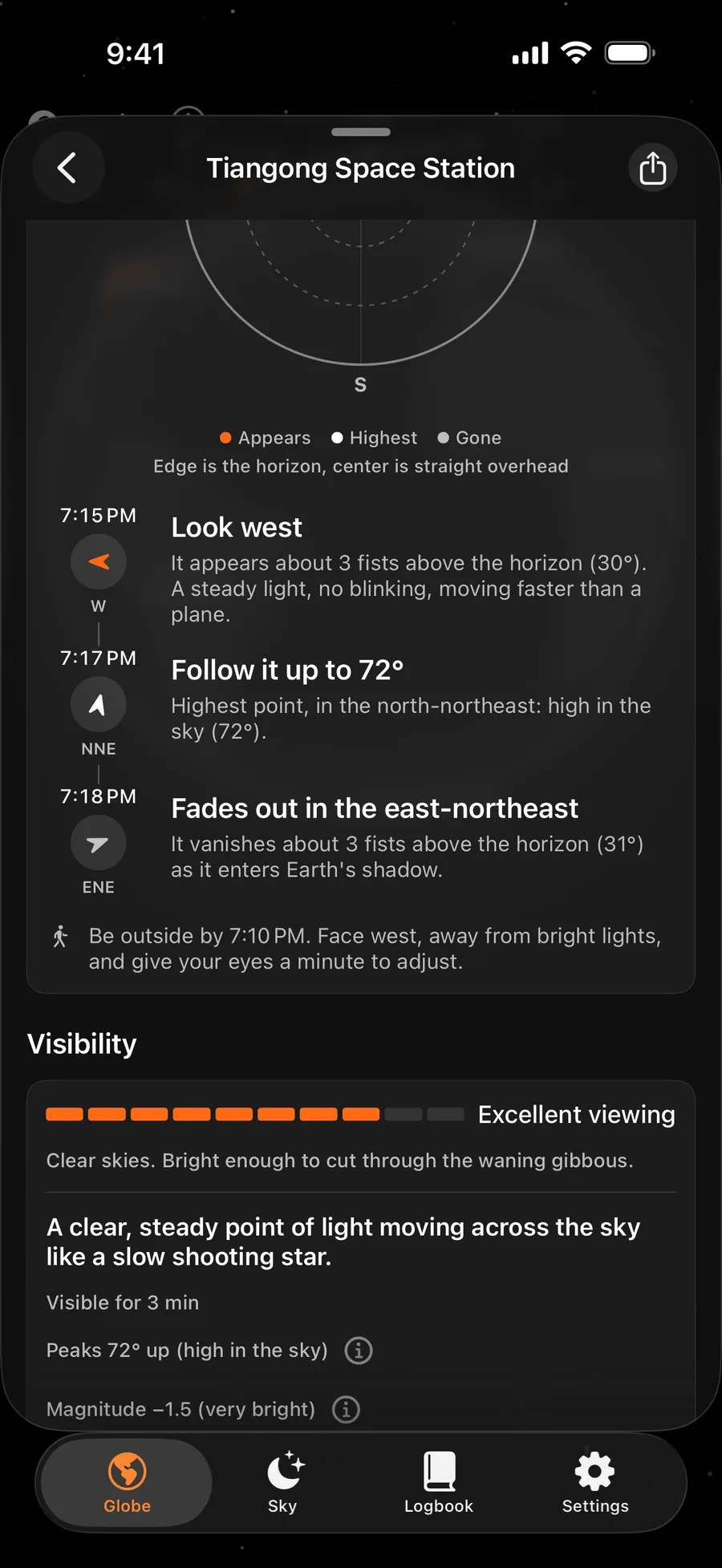
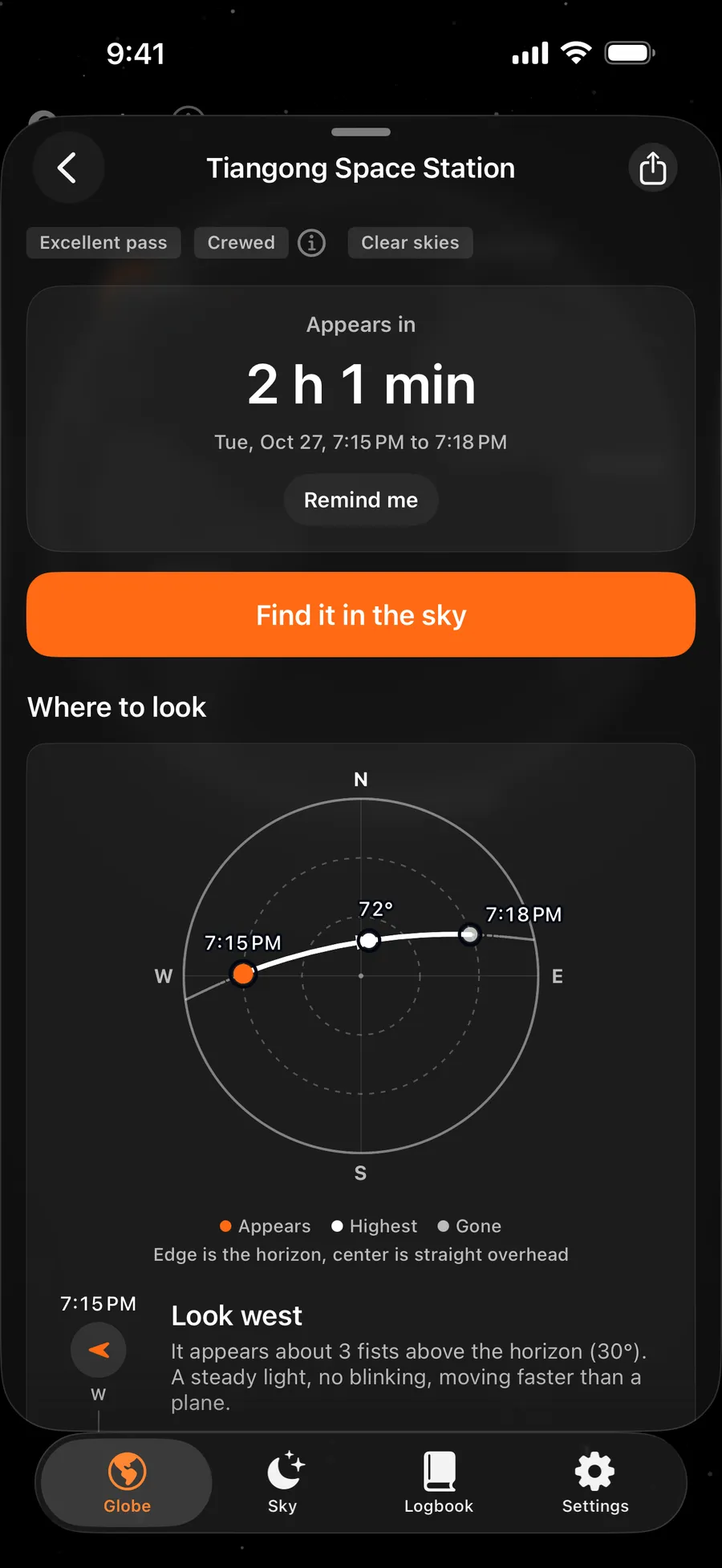
Every pass comes with a sky chart and timed steps. Look west at 7:15, follow it up to 72°, watch it fade in the east-northeast. Directions you can follow from the backyard.
Flyby tells you when the space station, a rocket launch or a meteor shower will be visible from where you are, and which way to face. Echo keeps watch and lets you know before it happens.
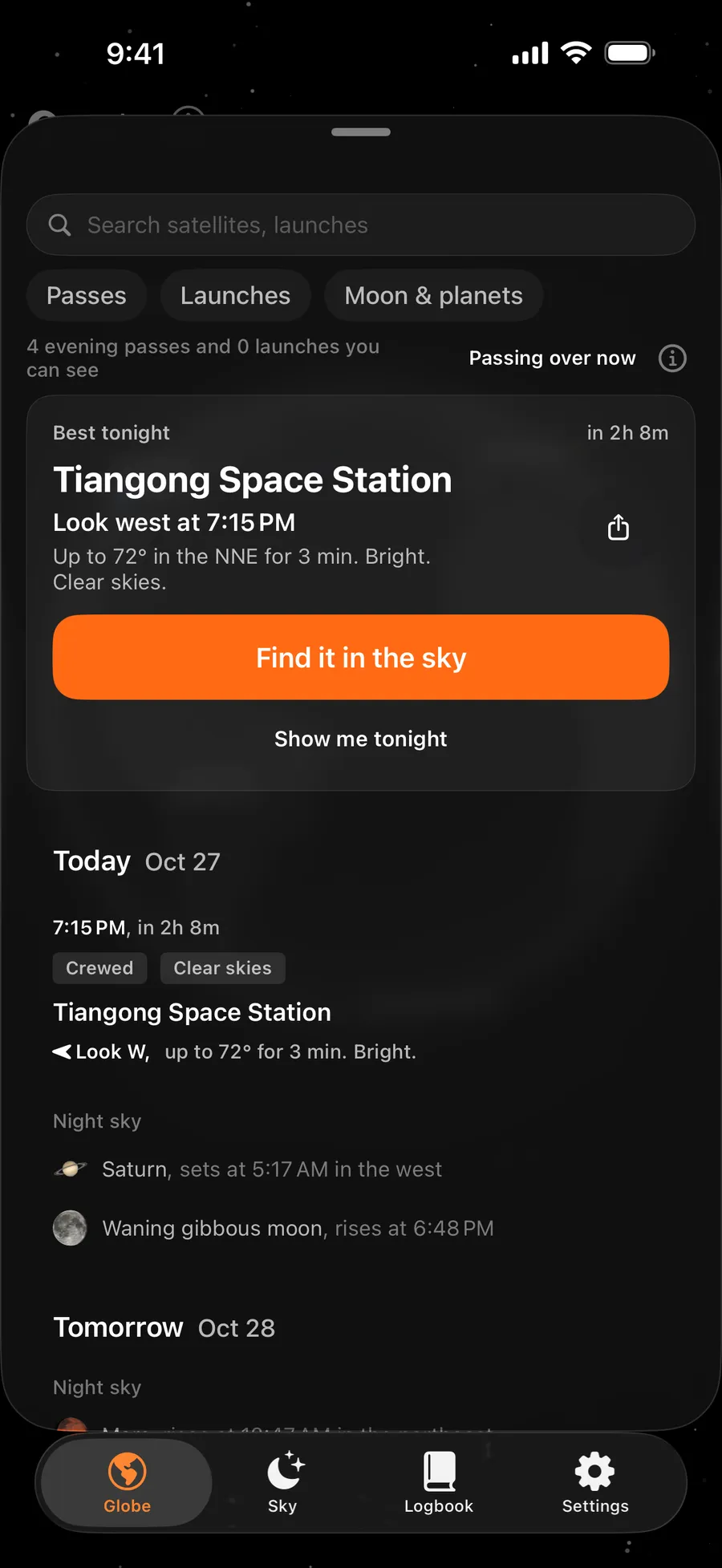
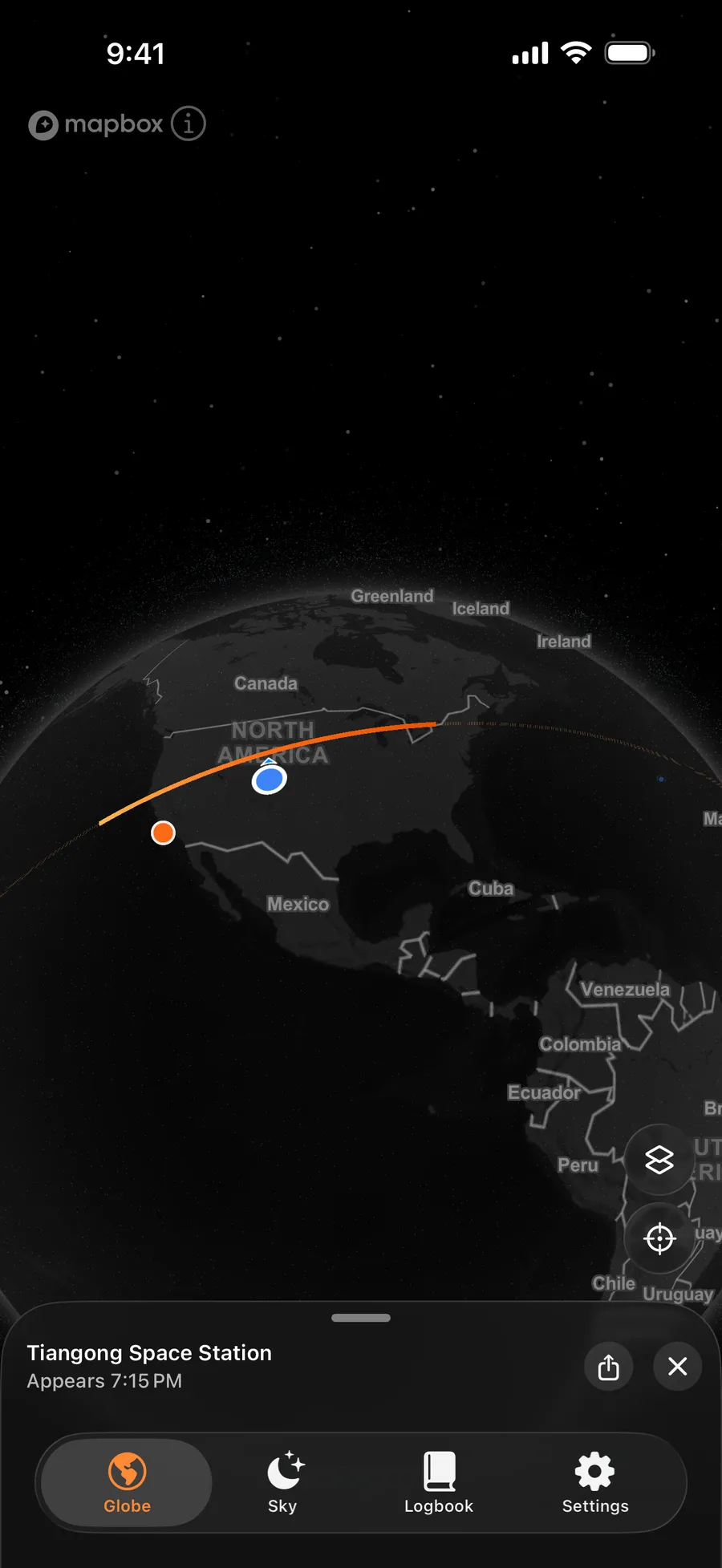

Tiangong in 10 minutesnow
Face west. It'll climb to 72° in the north-northeast and fade out in the east-northeast at 7:18 PM. Clear skies.
A launch you can see at 9:02 PM2h ago
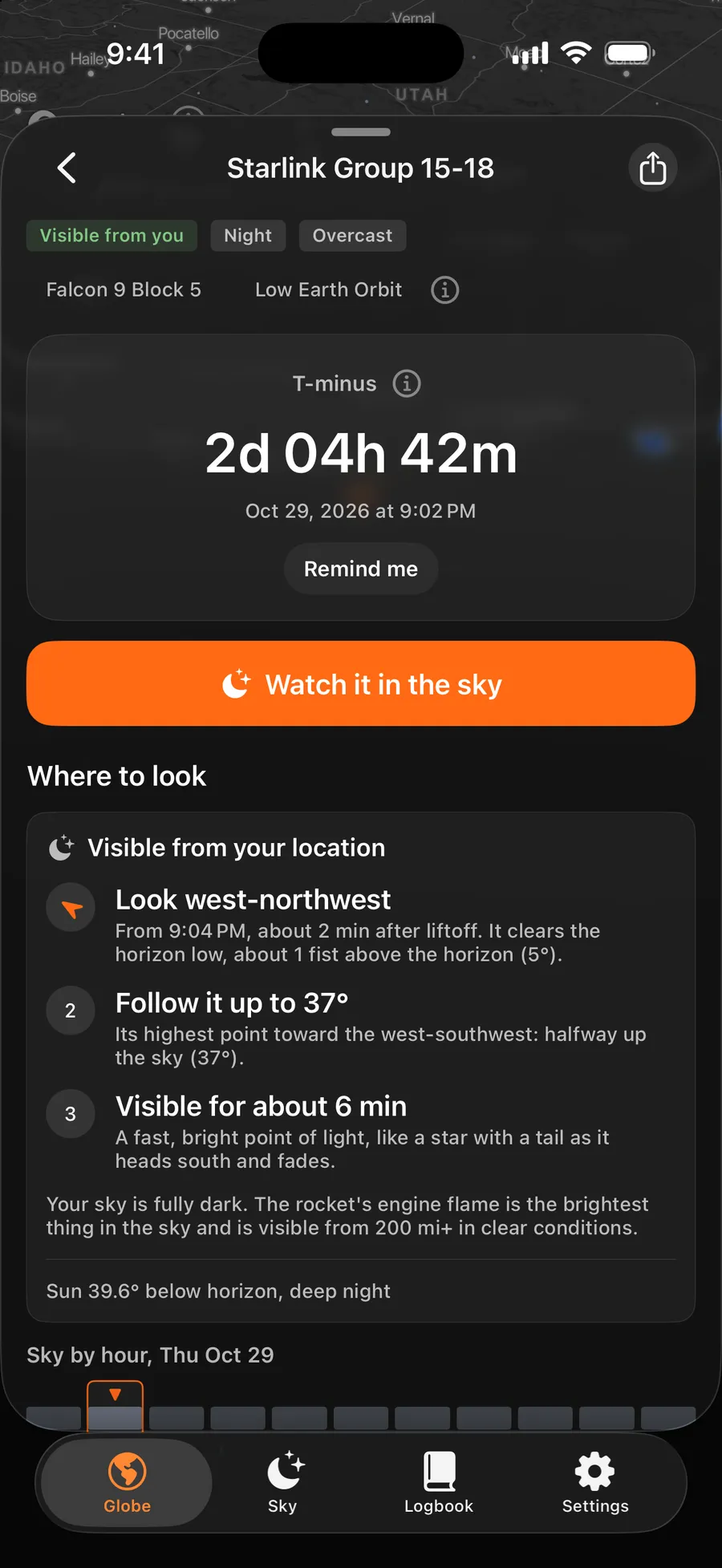
Starlink Group 15-18 lifts off from Vandenberg. Look west-northwest from 9:04 PM.
The Geminids peak at 1:55 AM9:30 PM
Look up, anywhere. Around 14 an hour from your sky.
Did you catch it?7:20 PM
Tiangong Space Station passed over at 7:17 PM. If you saw it, add it to your Logbook.
Tonight's passes, launches and the night sky, sorted by what you can actually see.
“I love that it tells you exactly when and where to look. It’s already become one of those apps I check regularly.”
Every pass comes with a sky chart and timed steps. Look west at 7:15, follow it up to 72°, watch it fade in the east-northeast. Directions you can follow from the backyard.
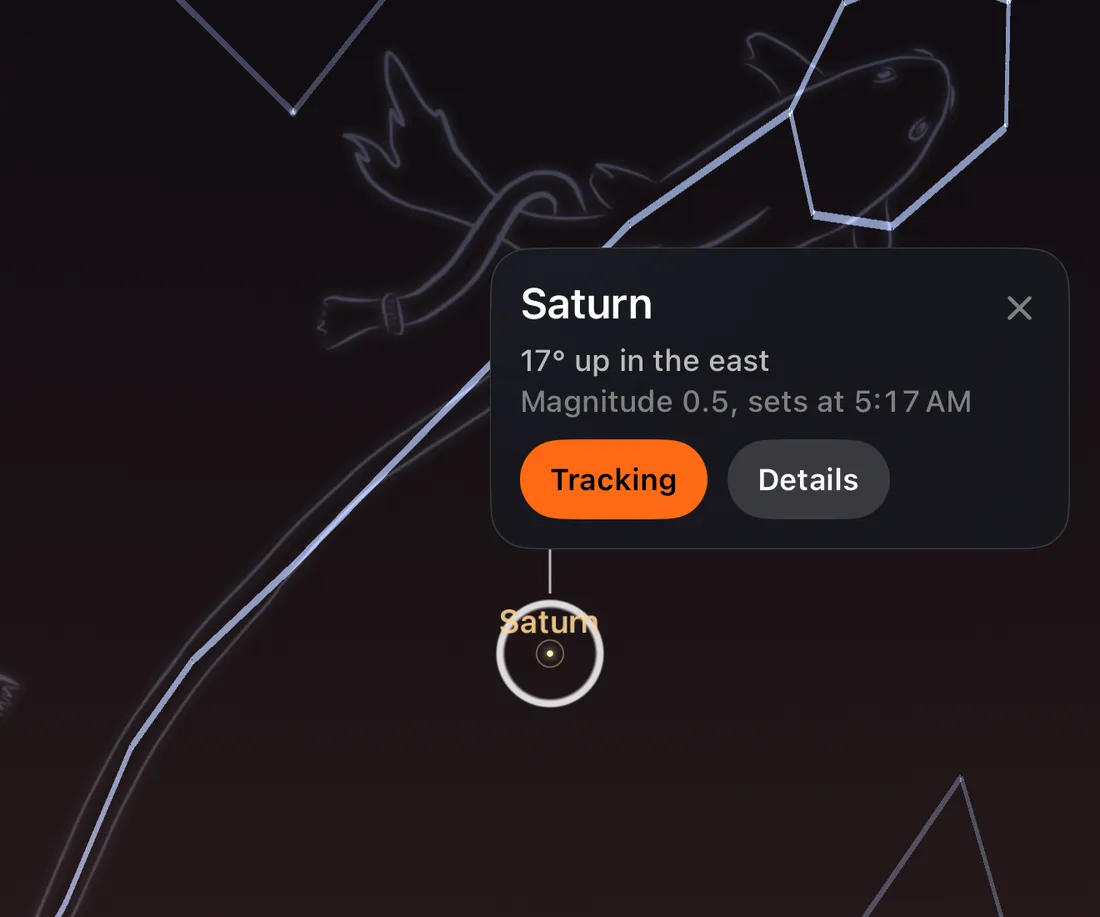
Tap Find it in the sky and hold up your phone. Flyby points you to the satellite, planet or star you're after and draws the constellations around it.
Flyby works out whether a launch will be visible from where you live, when it clears your horizon and which way to face. Then it counts down with you, webcast included.
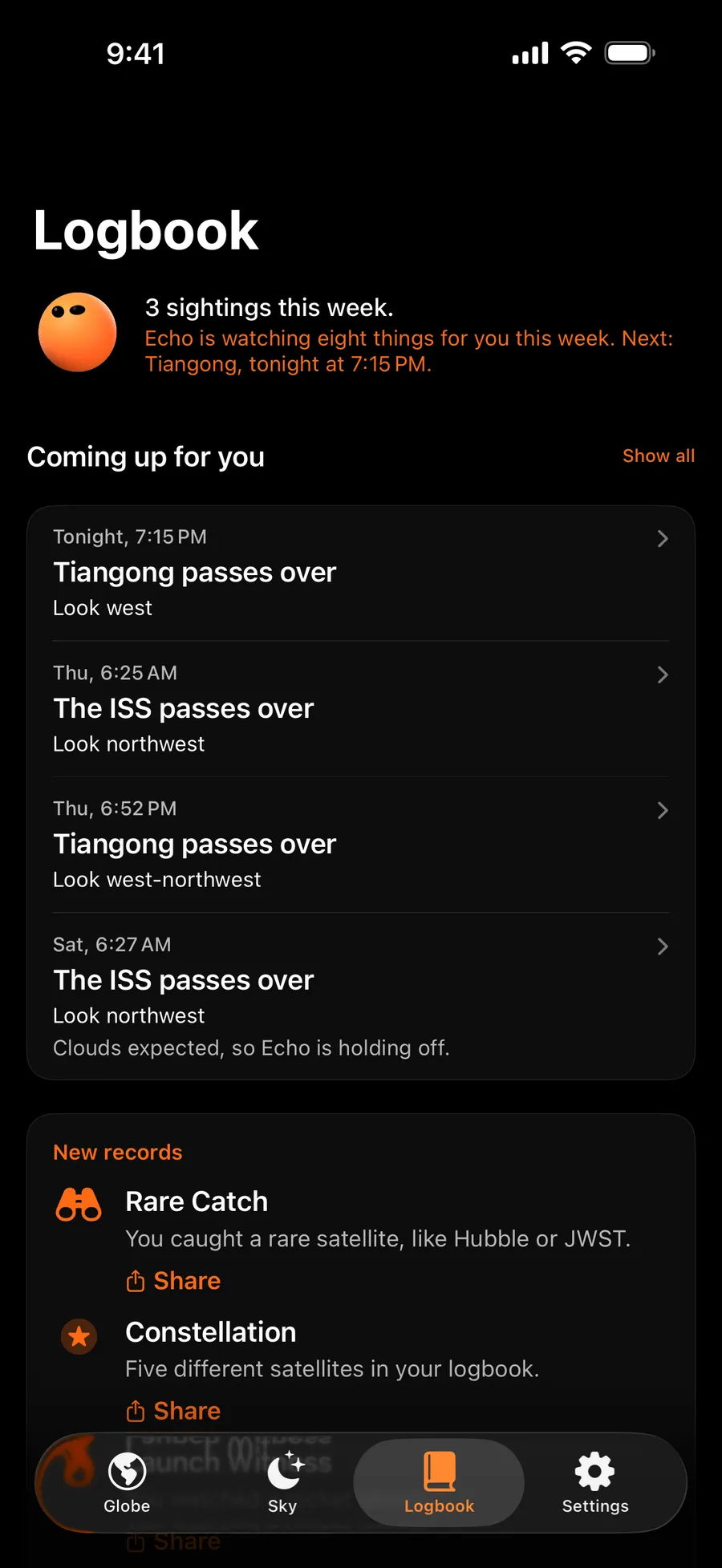
Echo checks what's coming over you and the weather, and only speaks up for the good ones. Clouds expected? Echo holds off and tells you why.
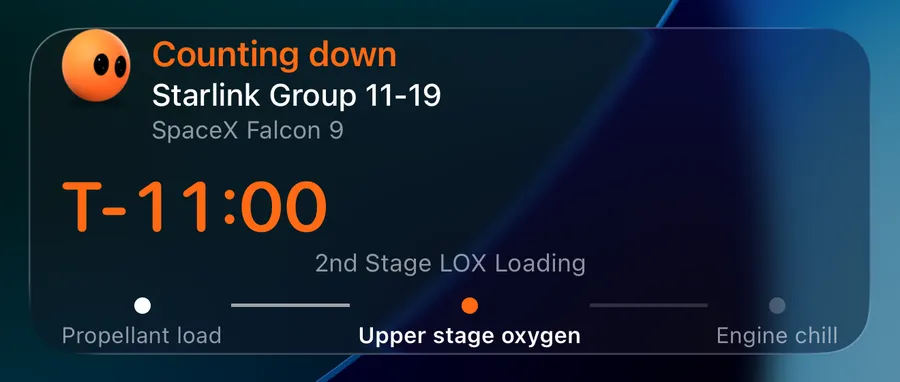
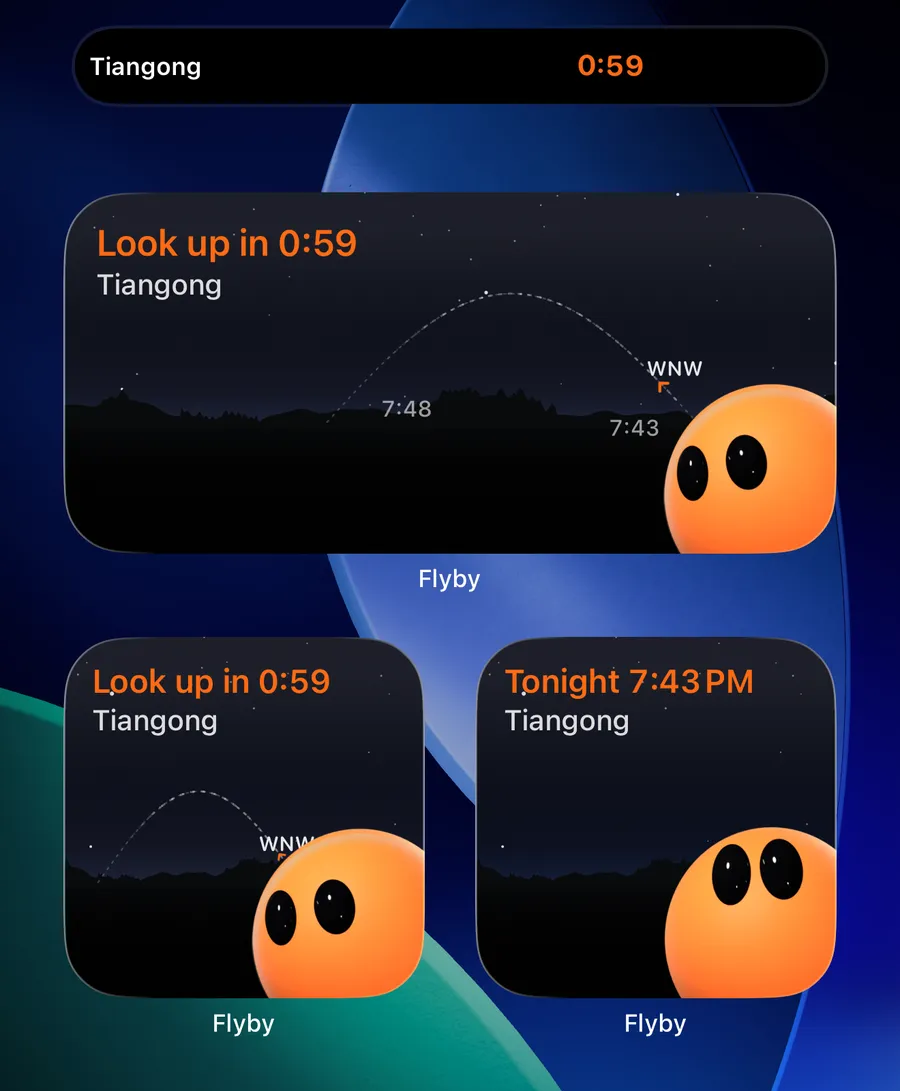
Widgets count down to your next pass. Live Activities keep a pass or a launch on your Lock Screen and in the Dynamic Island, right up to the moment it happens.
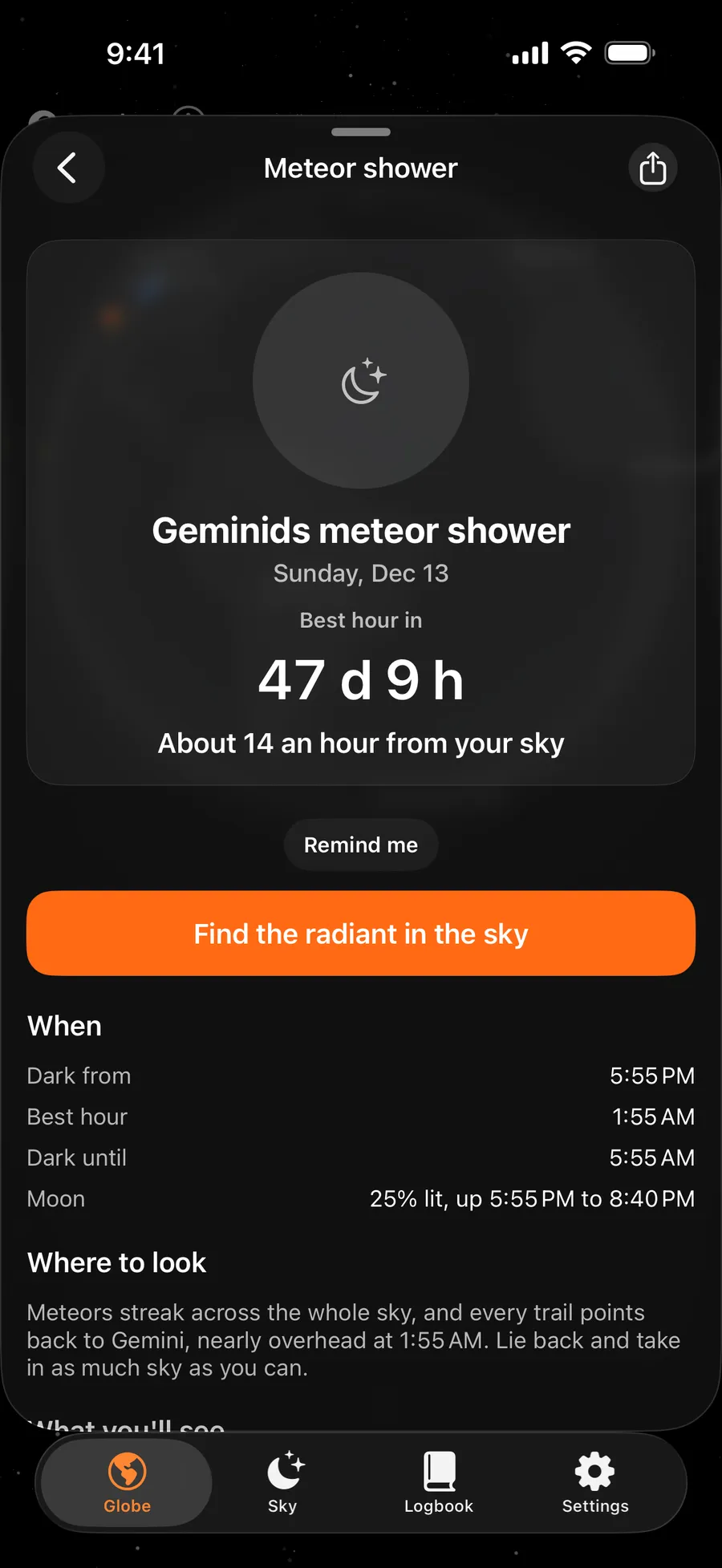
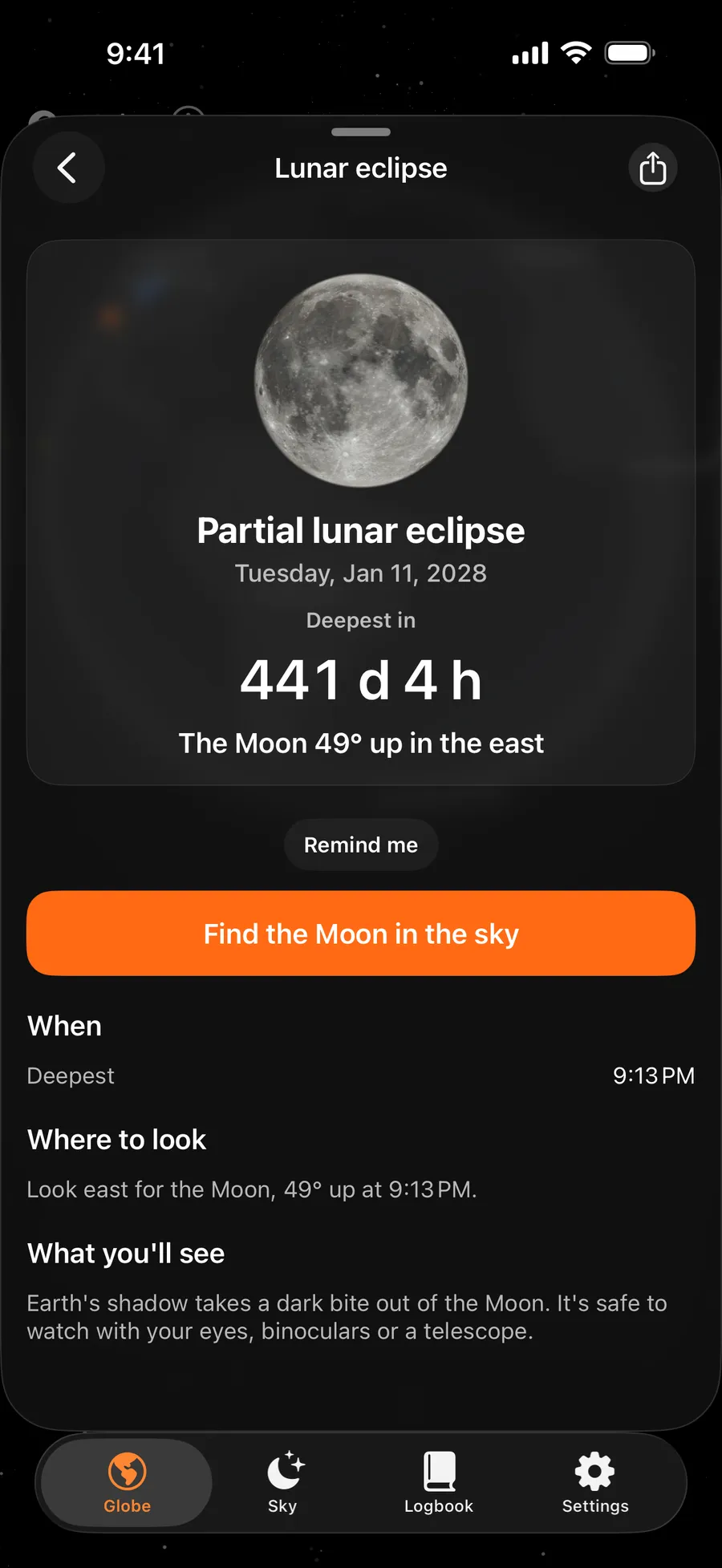
Meteor shower peaks, eclipses, the Moon and planets pairing up, and comets. Flyby gives you the best hour, which way to look and how many meteors to expect from your sky.
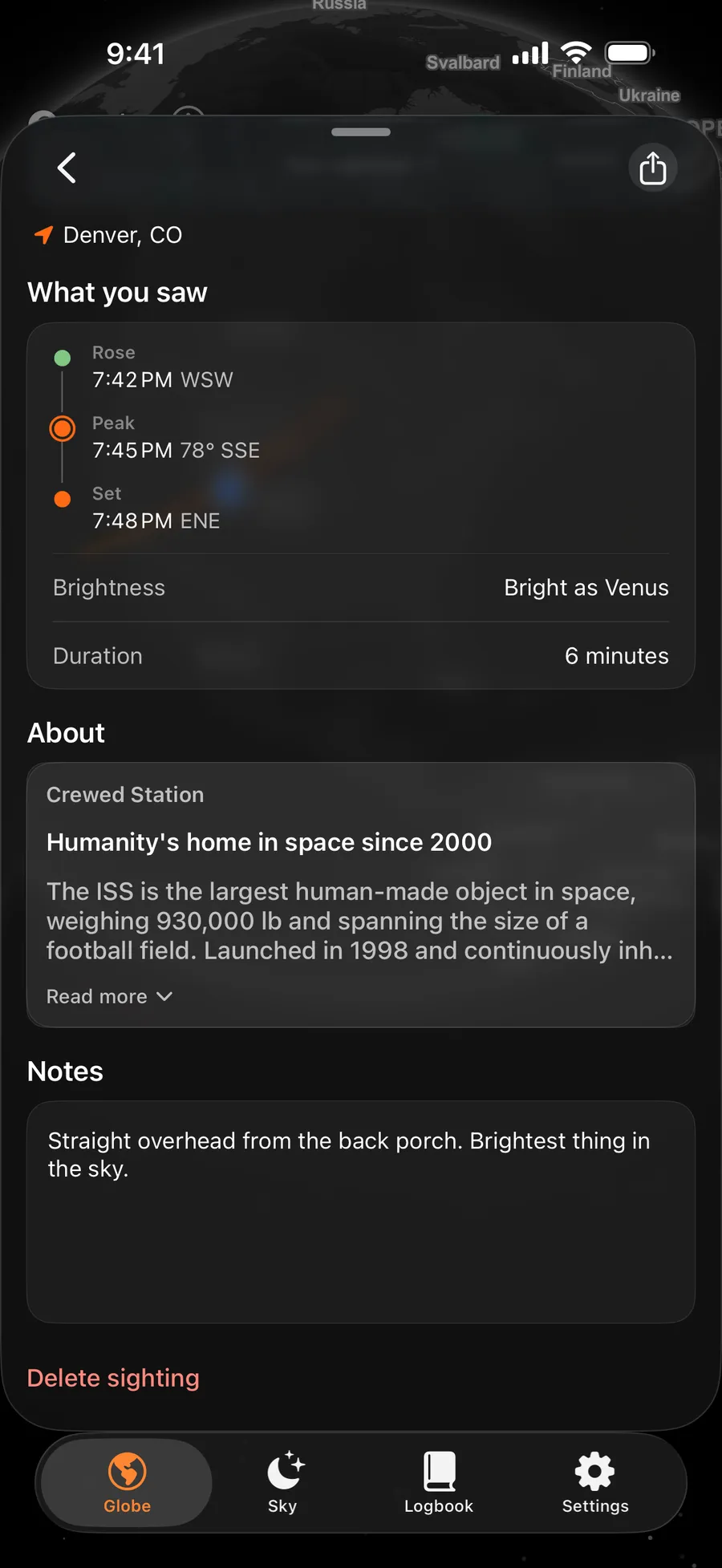
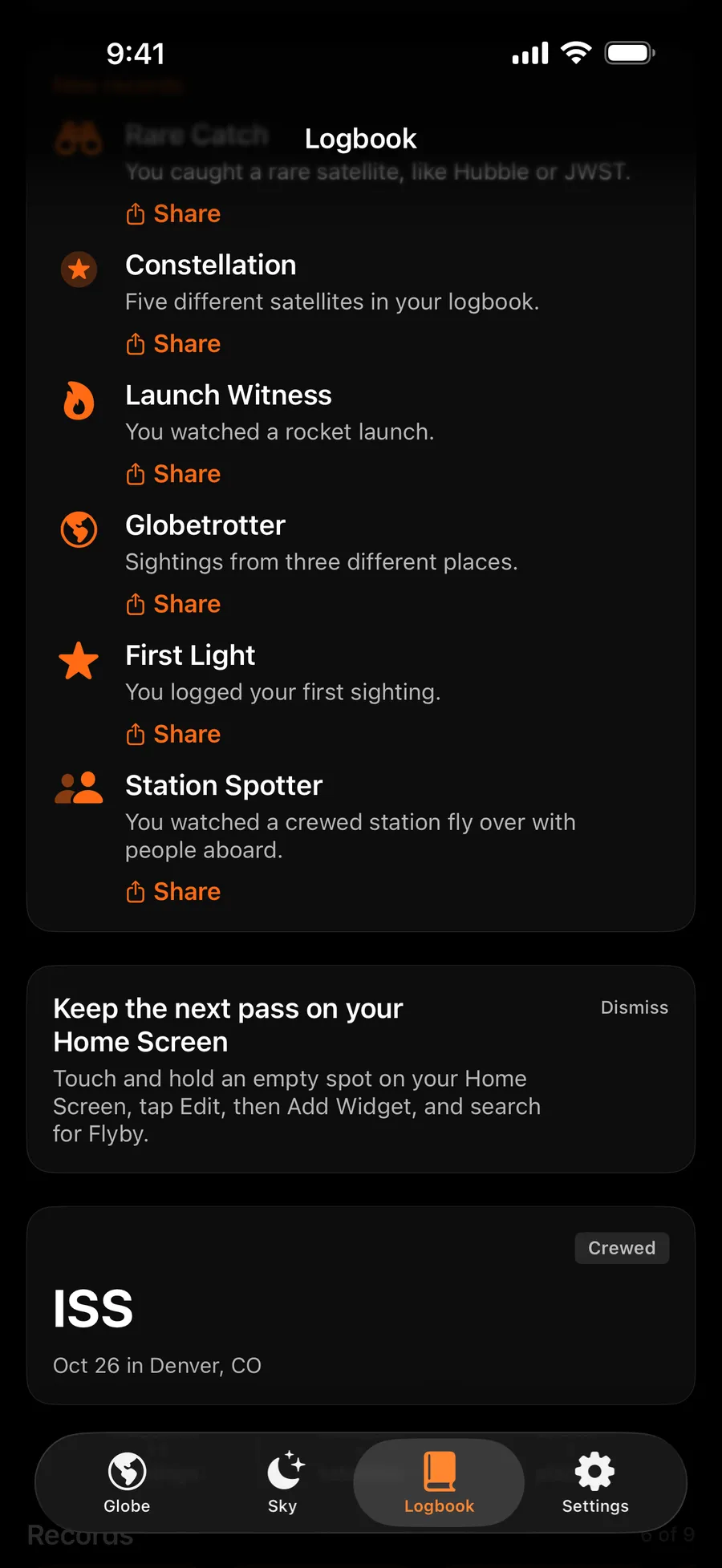
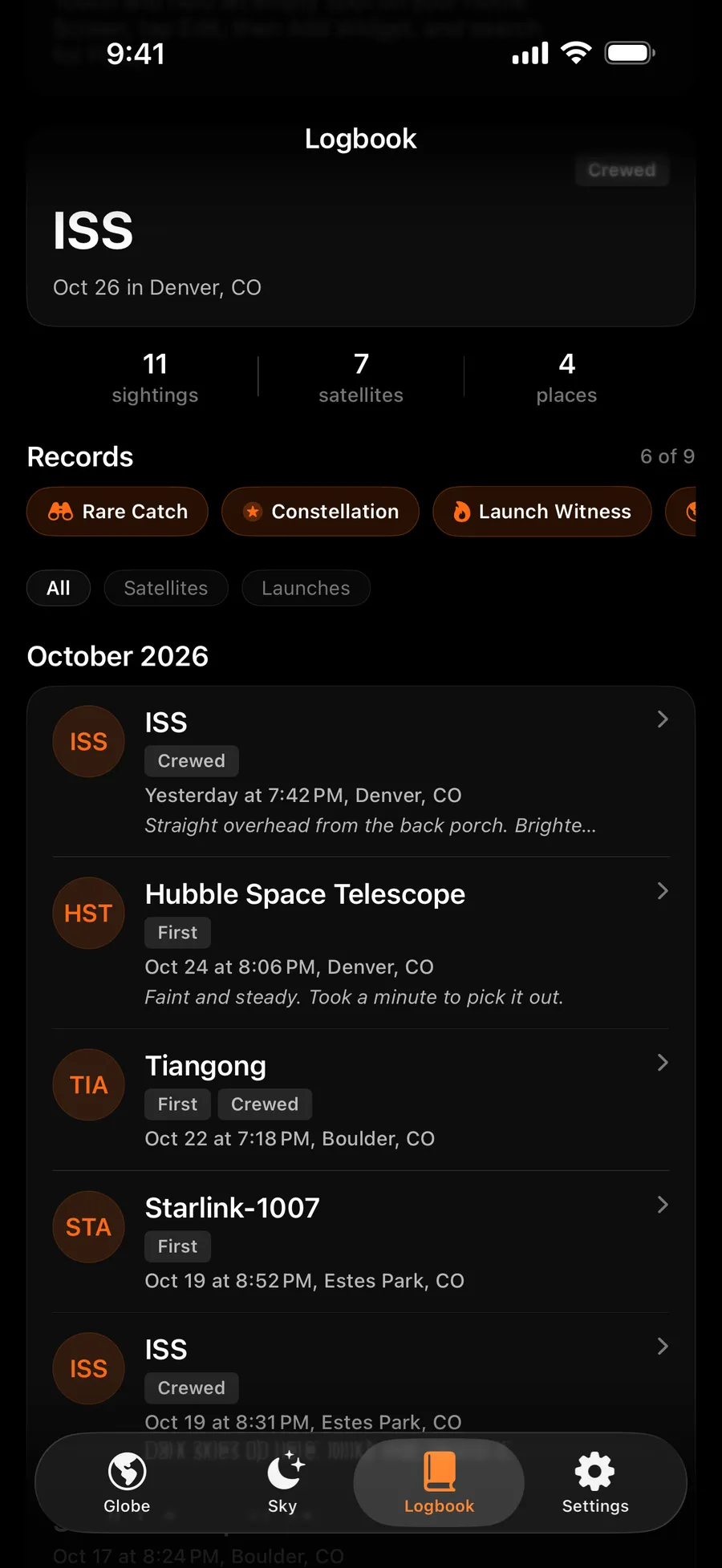
Log a pass when you see it. Flyby keeps the time, the place and how bright it was, and pins it on the globe.
Over time it adds up: satellites, places, streaks, and records like Rare Catch for spotting Hubble, or Launch Witness for your first rocket.
Live from the Flyby launch feed, in your time zone. Every launch has its own page with the rocket, the pad and the webcast.
This is a replacement satellite for the Indian Regional Navigation Satellite System. The constellation will provide India with an alternative to GPS and will be used for military and civilian use. Located at a geosynchronous orbit, the system will be operated by the Indian government.
Friday, Oct. 30, 2026, 5:00 to 9:00 p.m. UTC
Satish Dhawan Space Centre, India
Indian Space Research Organization
A classified mission for the United States Space Force. It is possibly a batch of classified LEO satellites based on SpaceX’s Starshield satellite bus, based on locations of rocket stage drop zones being exact fits with previous Starlink Group 15 launches.
Monday, Nov. 2, 2026, 1:56 to 5:56 a.m. UTC
Vandenberg SFB, CA, USA
SpaceX
A batch of 27 satellites for the Starlink mega-constellation - SpaceX's project for space-based Internet communication system.
Thursday, Nov. 5, 2026, 2:35 to 6:35 a.m. UTC
Vandenberg SFB, CA, USA
SpaceX
The feed, the globe and the night sky are free. Flyby Pro adds exactly where to look, passes on your Lock Screen and clear-sky forecasts, and you can try it free for a week.
Sign in with Apple and your logbook comes with you, to a new phone or to your iPad.
Check every upcoming launch or find satellite passes over your town right here, no app needed. New to this? Start with how to see the ISS tonight.
As a casual observer of the night sky, I really have very little idea of all that we can see even without sophisticated equipment. The app is very easy to use (for people like me) but it includes so much information that I think more seasoned astronomers would enjoy using it as well. I actually used it to track the Artemis II launch and was so impressed with the live-stream feed, the countdown clock etc. Also super cool feature that I have to comment on is that my phone vibrated along to the countdown clock. Just a nice touch!
as a young astrophysicist who works at nasa internships i live for this app !! i love how it notifies u when satellites r passing !! super cool keep up the great work !!
What a fantastic app! I watched the lead up, the countdown and the rocket launch. Wondering where it was after a few minutes, I looked up its location and was amazed at how fast it was over other countries. Such a great app. Totally recommend!!
Super cool app that allows you to track satellites as they are flying overhead and real time. I actually used this app to track the Artemis takeoff. Just point your iPhone up to the sky and the app does the rest!
We watched the launch using this app and it was super cool.
This app was easy to use and allowed me to locate the launches and satellites from anywhere. 10/10
Rated 4.5 on the US App Store. Read the reviews

Echo will let you know when there's something worth stepping outside for.
Download on theApp Store